Dirección
304 North Cardinal St.
Dorchester Center, MA 02124
Horas de trabajo
De lunes a viernes: de 7.00 a 19.00 horas
Fin de semana: 10.00 A 17.00 HORAS

Dirección
304 North Cardinal St.
Dorchester Center, MA 02124
Horas de trabajo
De lunes a viernes: de 7.00 a 19.00 horas
Fin de semana: 10.00 A 17.00 HORAS

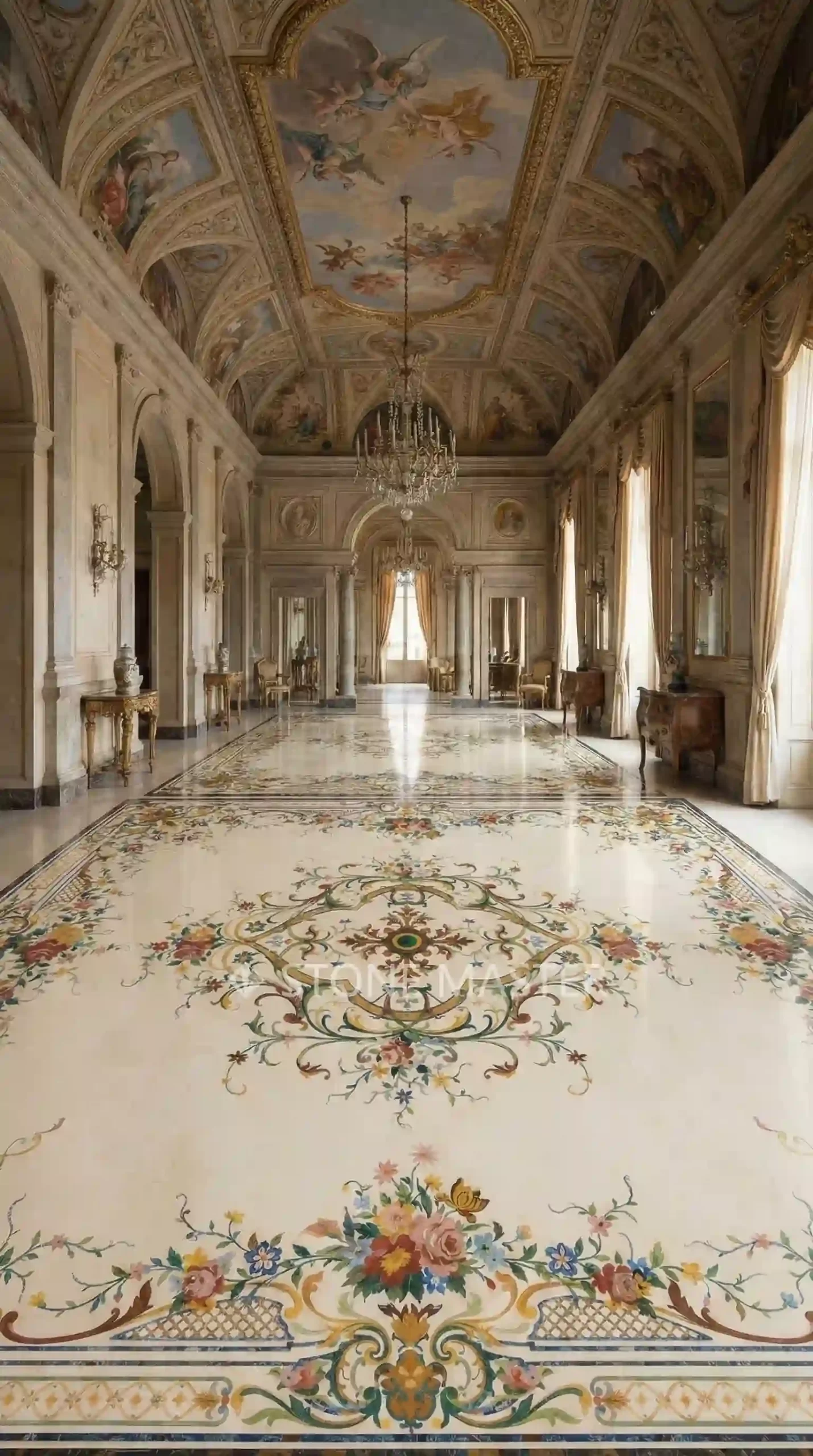
Marble Flooring transforms interiors with elegance and durability. Discover tips on marble inlay flooring, floor design, and creating timeless rooms with style.
Suelos de mármol has been used in architecture and interior design for centuries, valued for its natural luminosity, refined veining, and enduring aesthetic appeal.
Unlike materials driven by short-term trends, marble possesses a visual language that remains relevant across different design eras.
When applied with thoughtful planning, suelo de mármol contributes to interiors that feel balanced, elegant, and long-lasting.
Its interaction with light and space enhances both visual depth and spatial clarity, allowing rooms to maintain their character over time rather than appearing dated.
Marble inlay flooring further elevates floor design by introducing structure, proportion, and subtle decorative rhythm.
Through carefully composed patterns, marble floors can define zones, guide movement, and reinforce the architectural integrity of a space.
This article explores how strategic marble flooring choices—ranging from material selection to layout and detailing—can help create interiors that achieve a truly timeless appearance while maintaining long-term design value.
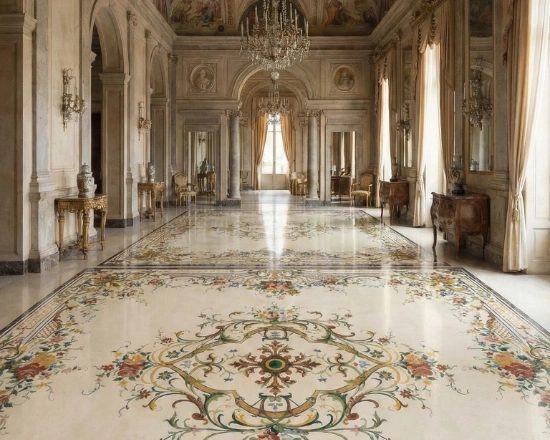
Marble flooring has long been regarded as a foundational element in timeless interior design due to its material integrity, visual depth, and architectural compatibility.
Unlike decorative finishes that serve as surface embellishments, marble flooring operates at a structural and spatial level, influencing how a room is perceived, experienced, and valued over time.
A well-considered marble floor design does more than complete an interior.
It establishes proportion, reinforces architectural intent, and provides a visual continuity that supports both classical and contemporary spaces.
This is why marble flooring continues to be specified in projects where longevity, aesthetic restraint, and long-term value are essential.
Natural materials have always formed the backbone of enduring interior spaces.
Among them, marble flooring stands apart for its ability to age gracefully while maintaining its aesthetic authority.
Unlike trend-driven materials—such as synthetic surfaces, printed tiles, or short-cycle finishes—natural stone evolves rather than deteriorates.
Subtle changes in patina, tone, and surface texture enhance character instead of diminishing it.
Key distinctions between marble flooring and trend-based materials include:
Marble inlay flooring further strengthens this timeless quality by introducing controlled ornamentation rooted in proportion and geometry rather than decoration alone.
When patterns are derived from architectural logic, they remain visually balanced regardless of changing design trends.
In timeless interiors, natural materials are not selected for immediate impact.
They are chosen for their ability to support long-term spatial harmony—and marble flooring fulfills this role with exceptional consistency.
Throughout architectural history, marble flooring has been used not as a symbol of excess, but as a marker of permanence and cultural continuity.
From ancient civic buildings to Renaissance palaces, marble floors established order, hierarchy, and spatial clarity.
In classical architecture, marble floor design was closely tied to symmetry and proportion.
Geometric layouts, restrained marble inlay flooring, and carefully balanced color contrasts reinforced the architectural structure rather than competing with it.
En contemporary architecture, the role of marble flooring has evolved—but its relevance has not diminished.
Modern interiors reinterpret marble through simplified layouts, larger slab formats, and reduced pattern density.
Contemporary applications often emphasize:
This shift demonstrates an important principle of timeless design:
materials that are fundamentally sound do not require stylistic reinvention to remain relevant.
Whether used in a classical residence or a modern architectural space, marble flooring supports design intent without overpowering it.
Its adaptability across eras is a key reason it remains a preferred foundation for enduring interiors.
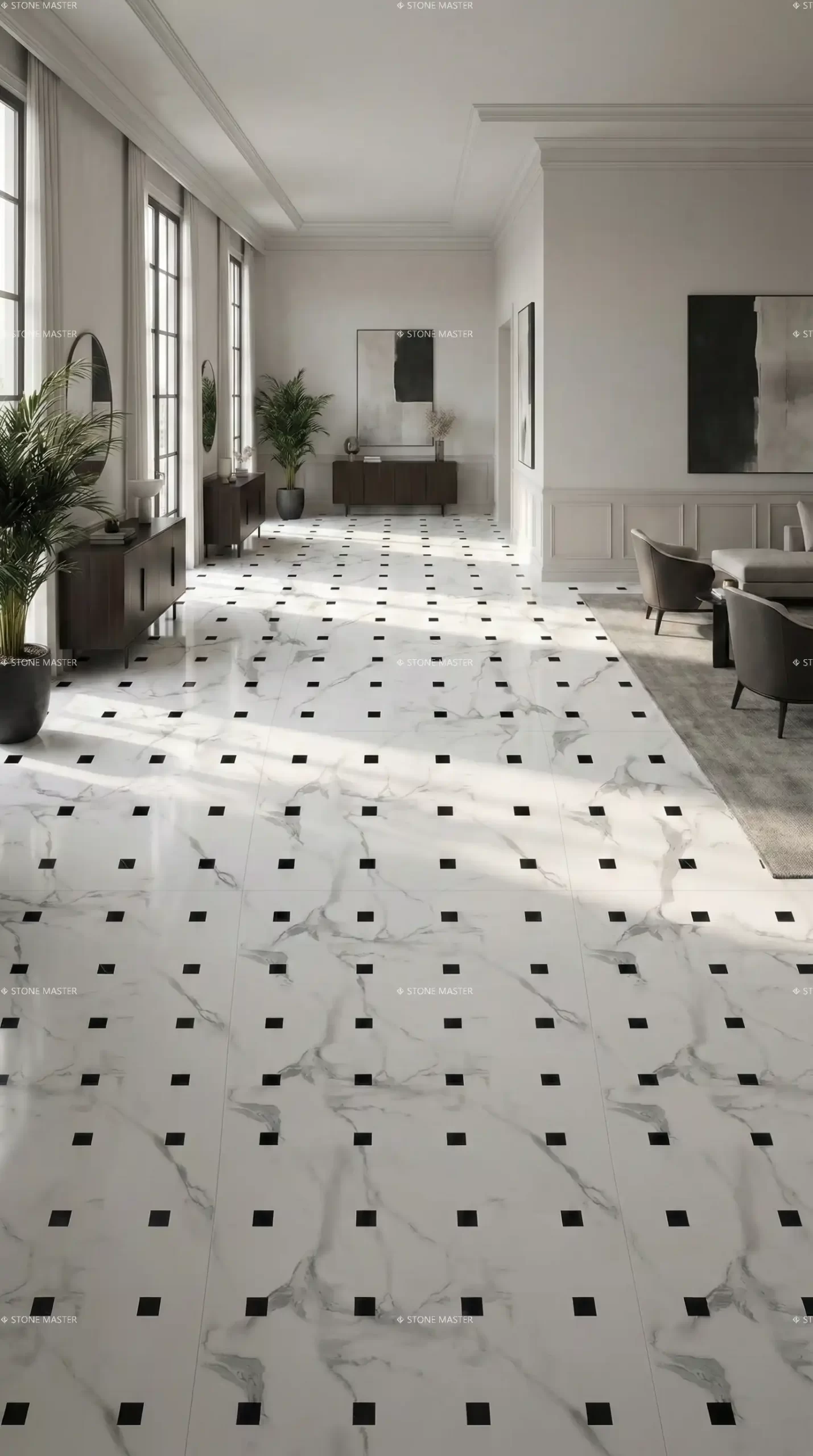
Beyond aesthetics, marble flooring offers measurable long-term performance advantages that contribute directly to value retention.
When properly specified, installed, and maintained, a marble floor can perform reliably for decades.
Unlike layered or composite materials that degrade structurally over time, marble retains its core integrity even as surface characteristics evolve.
Performance factors that support long-term use include:
From a financial perspective, marble flooring is often viewed as a value-preserving investment rather than a consumable finish.
Properties featuring well-executed marble floor design tend to maintain stronger resale appeal, particularly in high-end residential and luxury commercial markets.
Marble inlay flooring further enhances this value when executed with restraint and craftsmanship.
Instead of relying on surface decoration, inlays integrate directly into the floor structure, ensuring durability and design continuity.
Timeless interiors are not defined by how they look on completion day.
They are judged by how they perform, age, and remain relevant years later.
Marble flooring meets these criteria by aligning material longevity with enduring architectural value.
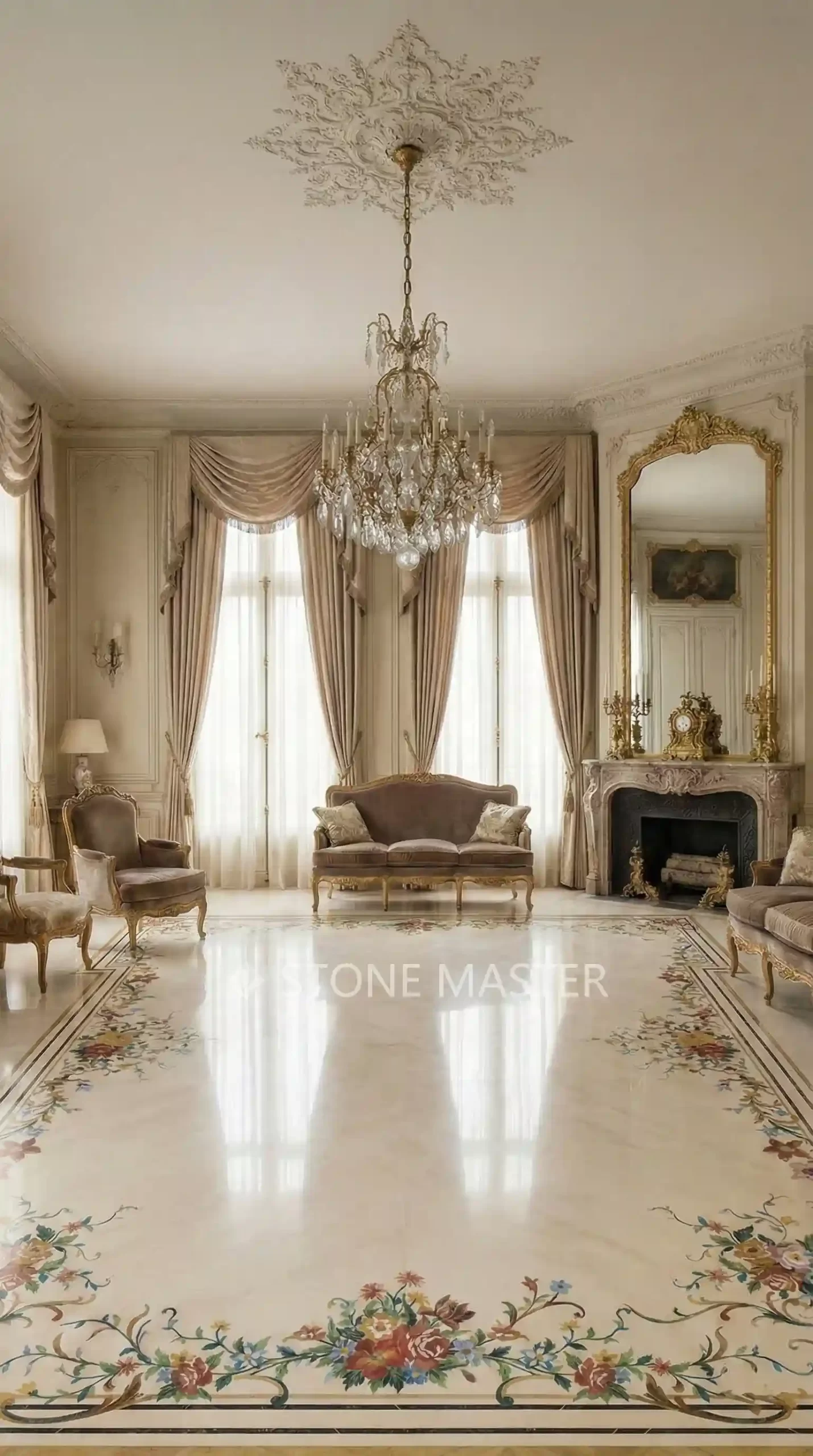
Choosing the right marble flooring is not a matter of following current design trends, but of understanding how material characteristics interact with space, light, and proportion over time.
A timeless marble floor design is built on restraint, balance, and an informed reading of how the stone will perform visually and physically for decades.
Rather than focusing on novelty, successful marble flooring selections prioritize visual calm, material consistency, and adaptability to evolving interior styles.
This section examines the key factors—veining, texture, finish, and marble type—that determine whether a marble floor will remain elegant long after design trends have shifted.
Veining, surface texture, and finish define the visual rhythm of marble flooring.
These elements influence how the marble floor reads at scale, how it interacts with light, and how it supports the overall floor design rather than dominating it.
A timeless marble flooring specification begins with understanding these characteristics as architectural tools, not decorative effects.
Veining is one of the most defining visual features of marble flooring, yet it is often misunderstood.
The choice between soft veining and bold veining directly affects the emotional tone and longevity of a space.
Soft veining is typically associated with calm, continuity, and visual neutrality.
Fine, flowing veins create a background effect that supports furniture, lighting, and architectural details without competing for attention.
Soft-veined marble flooring is especially suited for:
In contrast, bold veining introduces strong visual movement and dramatic contrast.
When used deliberately, it can serve as a focal element within a controlled composition.
However, excessive or poorly planned bold veining can overwhelm a space, making interiors feel visually heavy or stylistically rigid.
For timeless applications, bold-veined marble flooring is best reserved for:
A restrained approach ensures that veining enhances architectural structure rather than dictating it.
Surface finish plays a critical role in how marble flooring reflects light and sets the mood of an interior.
The choice of finish should align with the desired atmosphere and long-term maintenance expectations.
Polished marble flooring reflects light strongly, enhancing luminosity and visual clarity.
It is often used in formal interiors where brightness and refinement are priorities.
Key characteristics include:
Honed finishes offer a softer, satin-like surface that diffuses light rather than reflecting it directly.
This finish is widely favored in contemporary marble floor design due to its understated elegance and reduced glare.
Benefits of honed marble flooring include:
Matte finishes further reduce reflectivity and create a subdued, tactile quality.
They are often specified in modern or minimalist interiors where material presence is felt rather than highlighted.
Selecting the appropriate finish allows marble flooring to control mood, balance light, and support the overall floor design without appearing dated.
Not all marble types perform equally in timeless interior design.
Color consistency, veining stability, and historical relevance all contribute to a marble floor’s ability to remain visually relevant across decades.
Choosing classic marble varieties is less about prestige and more about predictability and adaptability.
White and neutral marble flooring has remained central to timeless interiors due to its versatility and architectural clarity.
These marbles provide a balanced foundation that accommodates a wide range of design styles.
Carrara marble is characterized by soft gray veining and a cool, understated palette.
Its restrained appearance makes it ideal for large marble floors where visual calm is essential.
Calacatta marble offers bolder veining with higher contrast, often used in more formal or expressive interiors.
When applied with moderation, it can elevate a marble floor design without sacrificing longevity.
Cream and ivory-toned marbles introduce warmth while maintaining neutrality.
These tones are particularly effective in residential spaces where comfort and visual softness are priorities.
Advantages of classic neutral marble flooring include:
Marble inlay flooring using neutral marbles further reinforces timelessness by emphasizing geometry and proportion rather than color contrast alone.
Dark marble flooring can be timeless when used with precision and restraint.
The key lies in balance—between light and dark, solid and void, surface and space.
Dark marble floors are most effective when:
In marble inlay flooring, dark marble often functions as a framing or grounding element, providing contrast without overwhelming the composition.
This approach preserves visual depth while avoiding heaviness.
Poorly planned dark marble floor design can make interiors feel enclosed or overly formal.
Timeless results depend on careful proportioning, controlled surface area, and thoughtful transitions to lighter materials.
When executed correctly, dark marble flooring conveys sophistication, permanence, and architectural confidence—qualities that endure beyond short-term design trends.
Marble inlay flooring represents one of the most refined applications of marble flooring in interior design.
Rather than serving as surface decoration, inlay work integrates directly into the architectural language of a space, enhancing proportion, rhythm, and spatial hierarchy.
When thoughtfully designed, marble inlay flooring elevates floor design from a functional plane to a unifying element that connects rooms, guides movement, and reinforces the overall interior concept.
Its value lies not in ornamentation alone, but in how it structures visual experience across the entire home.
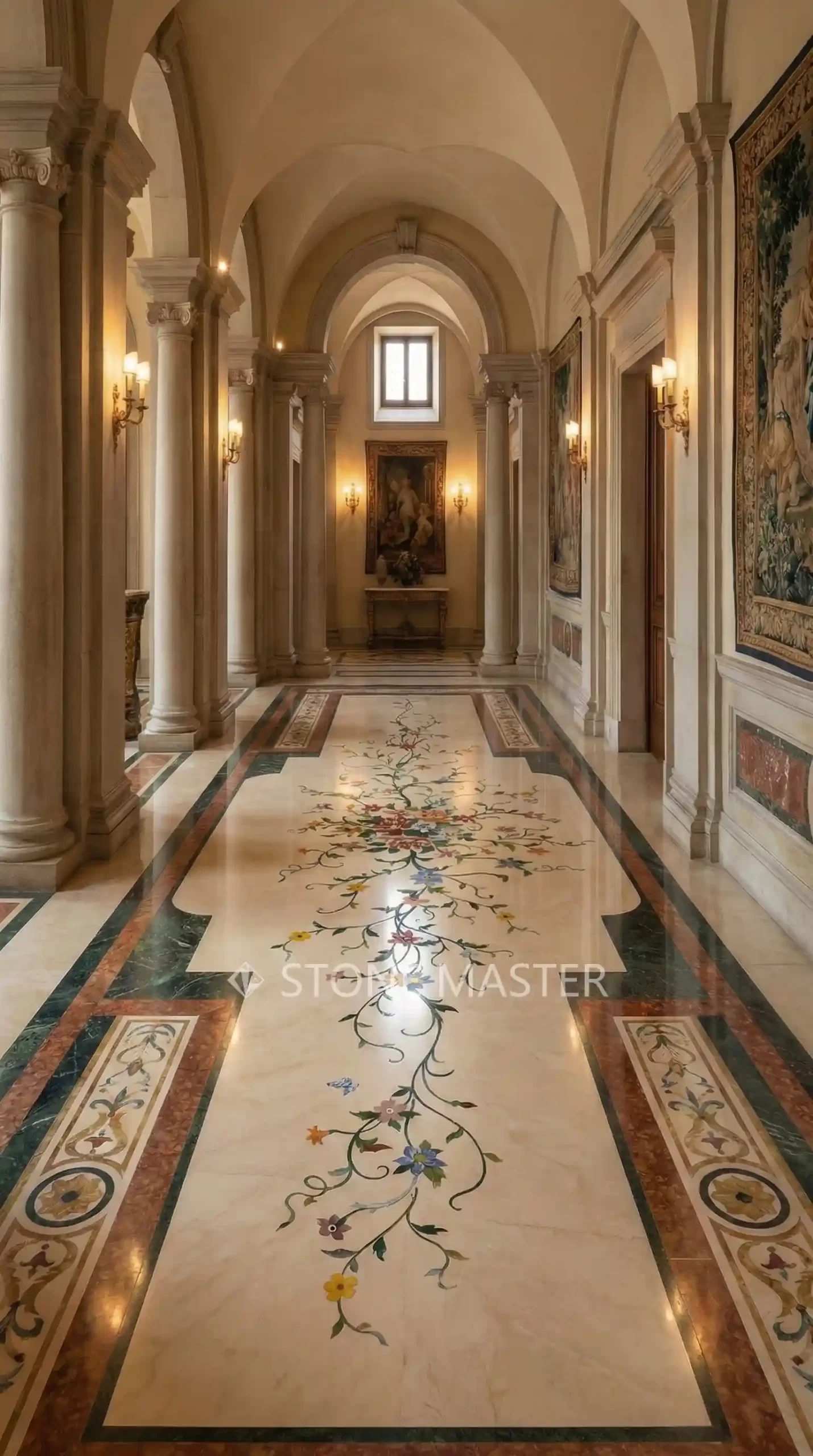
Marble inlay flooring plays a critical role in achieving interiors that feel cohesive, expansive, and architecturally complete.
Unlike isolated decorative elements, inlay designs influence how spaces relate to one another and how the interior is perceived as a whole.
One of the most important contributions of marble inlay flooring is consistency across flooring surfaces.
When a unified marble floor design is applied throughout key areas of a home, it reduces visual fragmentation and strengthens spatial continuity.
Key benefits of consistent marble flooring include:
This continuity is particularly effective in open-plan layouts, where marble flooring allows multiple functional zones to coexist without visual interruption.
Marble’s versatility further supports this approach.
In addition to floor applications, marble inlay flooring concepts can be extended to walls, borders, and transitional thresholds, reinforcing design cohesion without redundancy.
By using the same material language across horizontal and vertical surfaces, interiors gain depth and architectural coherence rather than decorative excess.
The layout of marble inlay flooring has a direct impact on how space is perceived.
Carefully planned inlay patterns can guide the eye, define circulation paths, and subtly expand the perceived scale of an interior.
Linear inlay compositions can elongate corridors and visually widen narrow spaces.
Radial or medallion-based layouts establish focal points that organize surrounding areas without enclosing them.
Effective marble floor design considers:
When inlay patterns align with structural geometry, marble flooring creates a sense of order and grandeur without appearing overly formal.
This approach allows interiors to feel open and fluid, even in large or multi-functional spaces.
One of the defining strengths of marble inlay flooring is its adaptability across surfaces.
When extended beyond the floor, inlay concepts can unify walls, thresholds, and feature areas while maintaining material integrity.
Common applications include:
This controlled repetition enhances architectural coherence without visual overload.
Rather than introducing new materials, designers can rely on variations in scale, layout, and finish to achieve differentiation within a consistent marble floor design language.
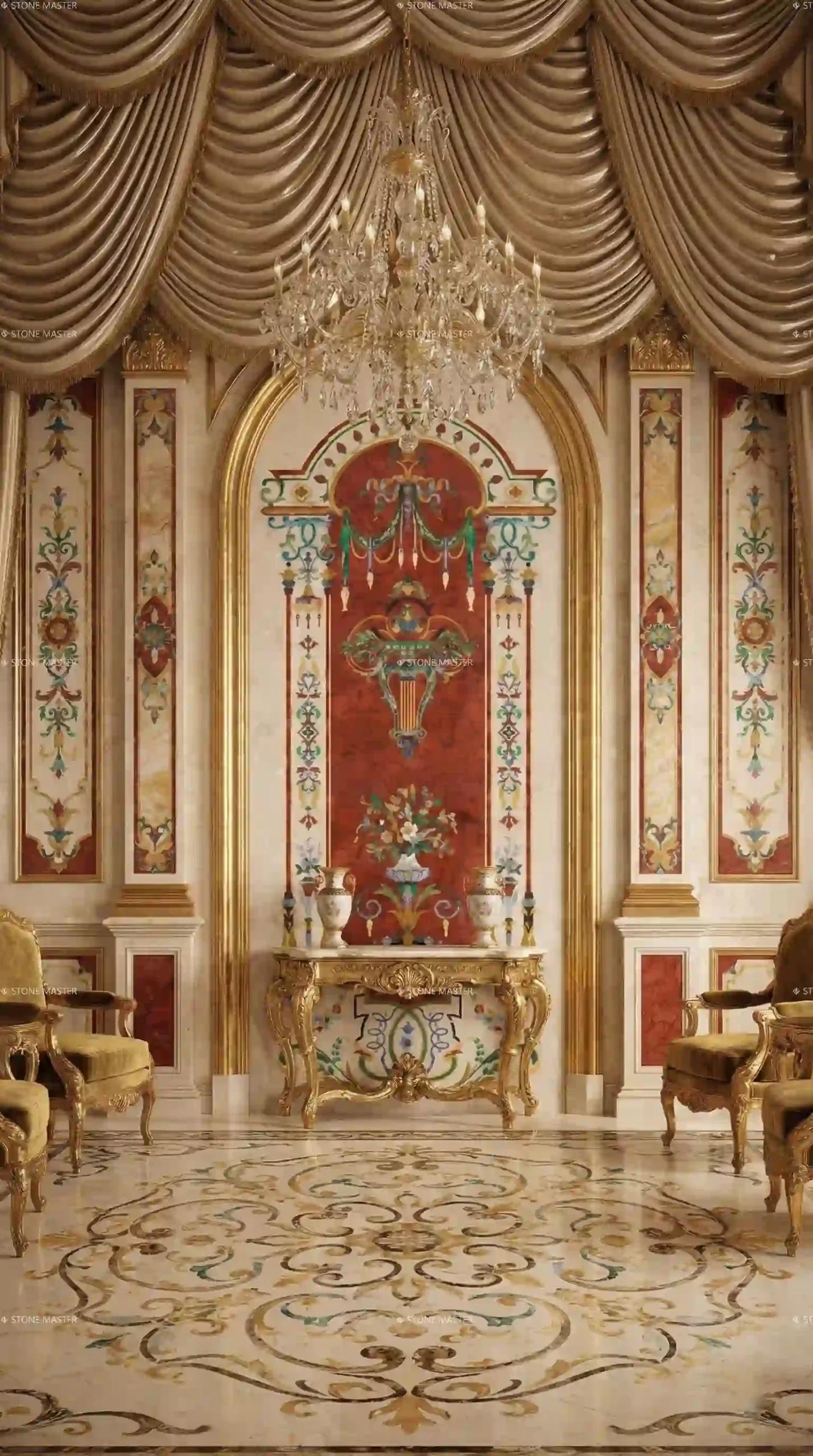
Layout decisions determine whether marble inlay flooring enhances or overwhelms an interior.
Timeless results depend on proportion, spacing, and the relationship between pattern and void.
Overly complex layouts can reduce visual clarity and limit adaptability.
In contrast, restrained inlay designs emphasize scale and balance.
Successful marble flooring layouts typically follow these principles:
When executed with discipline, marble inlay flooring enhances perceived space, reinforces architectural order, and introduces a quiet sense of grandeur that remains relevant over time.
Marble inlay flooring represents a refined evolution of traditional marble flooring, combining architectural precision with material artistry.
Rather than functioning as a surface finish, marble inlay flooring becomes an integral part of the floor design, shaping how space is perceived, organized, and experienced.
When used with intention, marble inlay flooring elevates interiors by introducing rhythm, proportion, and visual continuity.
Its enduring value lies in its ability to enhance spatial harmony without relying on short-lived decorative trends.
Marble inlay flooring plays a key role in establishing consistency across interior spaces.
A unified marble floor design strengthens visual continuity, allowing rooms to connect naturally rather than feel fragmented.
Consistent marble flooring throughout the home contributes to:
Marble’s adaptability further enhances this effect.
Inlay concepts can be applied not only to floors but also extended to walls, borders, and thresholds, reinforcing design language without introducing competing materials.
Layout decisions within marble inlay flooring directly affect how space is perceived.
Well-proportioned inlay patterns can expand visual scale, emphasize architectural axes, and introduce a sense of grandeur while maintaining balance and restraint.
Unlike standard marble floors, which rely primarily on slab selection and surface finish, marble inlay flooring is defined by craftsmanship and design intent.
Each inlay floor is composed through precise material selection, cutting, and assembly.
This process transforms marble flooring from a continuous surface into a structured composition with architectural depth.
Key distinctions include:
As a result, marble inlay flooring offers a level of personalization and permanence that standard marble floors cannot replicate.
One of the most important functions of marble inlay flooring is its ability to organize space without physical barriers.
Through geometry and pattern, inlay designs guide movement and establish visual order.
In open interiors, marble inlay flooring can:
This subtle spatial guidance improves both usability and visual clarity.
Rather than interrupting space, marble inlay flooring creates continuity while maintaining distinct spatial identities.
When aligned with architectural elements, inlay patterns enhance balance and rhythm across the interior, contributing to a sense of calm and coherence.
Beyond its functional role, marble inlay flooring holds significant artistic value in timeless interior design.
Patterns are not treated as decoration, but as architectural elements that support structure and proportion.
Geometric inlays, medallions, and linear compositions act as visual anchors within a space.
They establish focal points that enhance, rather than overpower, the surrounding design.
In this context, floors become visual centerpieces—not through excess, but through disciplined composition and material integrity.
Marble inlay flooring transforms the floor plane into a lasting expression of craftsmanship, design intelligence, and architectural continuity.
Marble flooring becomes truly transformative when it is applied with a clear design strategy rather than as a surface finish alone.
From pattern scale to color coordination and material continuity, the way marble flooring is used directly influences spatial perception, emotional response, and long-term design value.
The following approaches demonstrate how marble flooring can elevate interiors while maintaining timeless appeal.
Whole floor inlay designs represent a fundamental distinction between conventional marble flooring and marble inlay flooring.
While standard marble floors rely on slab placement and surface finish, full inlay compositions transform the floor into an architectural statement.
Historically, marble inlay flooring has been associated with palaces, civic buildings, and heritage interiors where craftsmanship and permanence were essential.
These floors were created through meticulous hand-cut techniques, often incorporating semi-precious stones and intricate patterns to achieve depth and refinement.
Key characteristics of whole floor inlay designs include:
In contemporary interiors, whole floor inlay marble flooring serves as a statement piece rather than decorative excess.
Large-scale motifs allow the floor design to feel open and continuous, avoiding visual clutter.
Common pattern approaches include:
When scaled correctly, marble inlay flooring creates visual continuity across large spaces, elevating the room without overwhelming it.
Color selection plays a critical role in how marble flooring influences mood, scale, and spatial clarity.
The psychological impact of color within interior spaces should guide marble floor design decisions rather than short-term stylistic preferences.
Light-colored marble flooring enhances brightness and creates an airy, open atmosphere.
By reflecting natural and artificial light, these tones visually expand space and support long-term versatility.
Light marble flooring is particularly effective in:
Common examples include Calacatta Oro, Carrara marble, and Celeste Blue.
These materials provide subtle variation while maintaining visual calm and architectural neutrality.
Dark marble flooring introduces boldness and depth when used with intention.
Rather than dominating a space, dark tones should be balanced through contrast with walls, trim, and architectural detailing.
Effective strategies include:
When applied selectively, dark marble flooring creates elegant focal zones without compromising openness.
Monochromatic marble floor design relies on varying shades within the same color family to create harmony and continuity.
This approach supports a unified and sophisticated interior aesthetic.
By layering tone rather than contrast, marble flooring flows seamlessly across rooms, allowing furniture and architectural features to take prominence.
Extending marble flooring concepts to vertical surfaces strengthens architectural unity.
Floor-to-wall applications blur boundaries between horizontal and vertical planes, enlarging the perceived scale of a room.
Key benefits of floor-to-wall marble continuity include:
This approach delivers the best results with light to medium marble tones, which maintain brightness and avoid enclosure.
A common example is pairing a white marble floor with matching white marble walls, creating a seamless and refined interior envelope.
Pattern scale significantly affects how marble flooring is perceived within a room.
Large-scale inlay patterns reduce visual noise and emphasize proportion rather than detail.
Geometric marble inlay flooring introduces order and rhythm.
Clean lines, symmetrical forms, and controlled repetition reinforce architectural clarity and spatial balance.
This approach is particularly effective in modern and transitional interiors where structure is emphasized over ornamentation.
Floral and organic patterns draw from classical design traditions.
When executed at an appropriate scale, they provide richness and softness without appearing ornate.
In timeless interiors, these motifs function as architectural accents rather than decorative overlays.
Continuous motifs in marble flooring help avoid visual fragmentation across spaces.
By extending patterns seamlessly between rooms, interiors feel more expansive and cohesive.
Key principles include:
When marble floor design prioritizes continuity, it reinforces openness and spatial harmony, supporting interiors that remain elegant and relevant over time.
Color is one of the most influential variables in marble flooring design.
Beyond aesthetics, the color of a marble floor directly affects how space is perceived in terms of scale, brightness, and emotional tone.
A well-planned color strategy allows marble flooring to enhance spatial clarity and visual balance, ensuring interiors feel open, composed, and enduring rather than visually constrained or trend-dependent.
Light marble flooring is widely used in timeless interiors for its ability to reflect light and visually expand space.
Pale tones create an immediate sense of openness while maintaining architectural restraint.
When integrated into a considered floor design, light marble flooring provides a neutral foundation that adapts easily to evolving interior styles.
Pale marble surfaces amplify natural light by reflecting it evenly across the room.
This effect is particularly valuable in spaces with limited window exposure or narrow proportions.
Light marble flooring contributes to:
By reducing visual weight at floor level, pale marble flooring allows ceilings and walls to feel higher and more expansive.
Certain light marble types have proven their longevity through consistent architectural use.
These materials offer subtle variation without visual distraction.
Common choices include:
These marbles support timeless marble floor design by balancing character and restraint, ensuring compatibility with both classic and contemporary interiors.
Dark marble flooring introduces depth and gravitas when applied strategically.
Rather than shrinking space, dark tones can ground interiors and enhance architectural presence.
Successful use of dark marble flooring depends on balance, proportion, and contrast.
Dark marble floors are most effective when contrasted with lighter surrounding elements.
This contrast defines boundaries and highlights architectural lines without creating visual heaviness.
Key strategies include:
By maintaining contrast, dark marble flooring becomes an accent of sophistication rather than dominance.
Trim, molding, and wall finishes play a critical role in supporting dark marble flooring.
Lighter trims and cool-toned walls soften transitions and preserve spatial clarity.
Effective balance can be achieved through:
This approach ensures dark marble flooring enhances elegance while maintaining openness.
Monochromatic marble flooring relies on tonal variation rather than contrast.
By layering shades within a single color family, interiors achieve continuity and visual harmony.
This strategy creates a seamless flow across spaces while maintaining depth and material richness.
Key principles include:
Monochromatic marble floor design delivers subtle luxury, where refinement is expressed through precision and material quality rather than bold contrast.
Marble flooring achieves its highest visual value in interiors that are composed with restraint.
Even the most carefully selected marble floor design can lose impact when surrounded by excessive visual noise or poorly coordinated elements.
A refined interior does not rely on abundance.
It depends on clarity, proportion, and deliberate design decisions that allow marble flooring to remain the visual foundation rather than compete for attention.
Overfilling a room weakens the presence of marble flooring.
Excess furniture, decorative objects, and fragmented layouts interrupt visual flow and diminish the sense of luxury that marble naturally provides.
Luxury interiors benefit from controlled emptiness.
When space is allowed to breathe, the marble floor becomes legible as a unified surface rather than a background obscured by objects.
Las consideraciones clave incluyen:
By reducing visual clutter, marble flooring can express its material depth, veining, and finish more clearly, reinforcing an uncluttered and refined atmosphere.
Highly contrasting trim and overly decorative borders often undermine the elegance of marble flooring.
Busy patterns, sharp color contrasts, and excessive outlining fragment the visual field and draw attention away from the marble floor itself.
To preserve refinement, trim should support rather than compete with marble flooring.
Recommended approaches include:
Ceiling color also plays a role in visual balance.
Lighter ceilings extend vertical perception and prevent the space from feeling compressed, allowing marble flooring to anchor the room without heaviness.
When trim, walls, and ceilings are treated as a cohesive envelope, marble floor design reads as intentional and composed rather than overstated.
Lighting is essential to revealing the true character of marble flooring.
Insufficient or poorly planned lighting can flatten veining, mute color variation, and reduce the reflective qualities that give marble its depth.
Natural light is particularly valuable, as it interacts dynamically with the marble surface throughout the day.
However, reliance on natural light alone is rarely sufficient.
Effective lighting strategies include:
Proper lighting enhances the natural luminosity of marble flooring, allowing its texture and tonal variation to remain visible and engaging.
When lighting is carefully integrated, marble flooring maintains its refined presence regardless of time of day or seasonal light changes.
Floor-to-wall marble applications represent one of the most sophisticated uses of marble flooring in interior architecture.
When marble is extended from the floor to vertical surfaces, it shifts from being a material choice to becoming an architectural system that unifies space, proportion, and visual flow.
Rather than treating the marble floor and walls as separate elements, this approach allows marble flooring to define the spatial envelope itself.
When executed with restraint, it enhances architectural clarity and creates interiors that feel cohesive, expansive, and enduring.
Continuous marble surfaces significantly influence how space is perceived and experienced.
By reducing interruptions between the marble floor and adjacent walls, interiors gain visual continuity that strengthens spatial coherence.
One of the primary advantages of floor-to-wall marble flooring is the removal of visual breaks.
Transitions between different materials often fragment space, drawing attention to boundaries rather than volume.
When marble flooring extends seamlessly upward:
This continuity also enlarges perceived space.
Without abrupt changes in material or color, the eye travels freely across surfaces, making rooms feel taller, wider, and more open.
In this context, marble floor design functions as a spatial amplifier rather than a decorative surface, reinforcing architectural intent through material consistency.
Successful floor-to-wall marble applications rely on discipline.
The objective is unity, not visual excess.
Color consistency is essential.
Using closely related tones for both marble flooring and wall applications maintains coherence and prevents the interior from feeling segmented.
Effective strategies include:
Pattern restraint is equally important.
Overly complex patterns or dense marble inlay flooring across multiple surfaces can overwhelm the space and diminish architectural clarity.
Instead, timeless marble floor design favors:
By controlling pattern density and color variation, floor-to-wall marble applications remain refined rather than visually dominant.
While floor-to-wall marble flooring can be impactful, it is most effective when applied selectively.
Certain spaces benefit more from this approach due to their scale, function, and architectural role.
Foyers
Entry spaces are ideal for floor-to-wall marble applications.
A continuous marble floor extending to walls establishes a strong first impression and reinforces spatial symmetry, creating a sense of arrival and permanence.
Baños
In bathrooms, floor-to-wall marble flooring enhances both visual continuity and functional performance.
Consistent surfaces reduce visual clutter while emphasizing cleanliness, light reflection, and material integrity.
Feature Living Areas
In select living spaces, floor-to-wall marble applications can anchor the interior and define architectural identity.
When combined with restrained furniture and thoughtful lighting, marble flooring becomes a unifying backdrop rather than a decorative focal point.
In all cases, successful application depends on proportion, lighting, and material selection.
When these factors are aligned, floor-to-wall marble flooring reinforces architectural unity and elevates the interior without excess.
A timeless marble interior is not defined solely by the selection of marble flooring or inlay patterns.
It is the combination of thoughtful spatial planning, restrained decoration, and strategic lighting that allows marble floors to remain visually and emotionally impactful over decades.
Adhering to fundamental design principles ensures that marble flooring continues to convey elegance, depth, and architectural integrity, rather than appearing dated or over-styled.
Below, we explore key strategies to maintain a refined and lasting marble interior.
The first principle of a timeless interior is clarity of space.
Even the most luxurious marble flooring can lose its visual impact if rooms are overfilled or furniture is poorly scaled.
Furniture scale is critical. Oversized pieces can overwhelm subtle veining or intricate marble inlay flooring, while too-small items make the space feel fragmented.
Ideal furniture complements the scale of the room and allows the floor to remain legible as a continuous design element.
Negative space is equally important. Allowing areas of open floor ensures that marble flooring communicates its material quality and spatial logic.
Key strategies for maintaining an uncluttered layout include:
By respecting negative space, marble flooring functions as a visual anchor, reinforcing proportionality, rhythm, and openness throughout the interior.
This approach is particularly effective in high-end residential projects where floor design serves as both a functional surface and an architectural statement.
Trends are fleeting; timeless interiors avoid decoration that relies on transient styles.
Even a well-executed marble inlay floor can appear dated when paired with short-lived finishes or excessive ornamentation.
Common pitfalls include:
To preserve the marble’s prominence, decorative elements should support rather than dominate the space.
Effective strategies include:
This restraint guarantees that interiors remain elegant and relevant over decades, regardless of short-term trends.
Lighting is crucial to revealing marble’s depth, texture, and color nuance.
Without proper illumination, even premium marble flooring can appear flat or lifeless.
Maximizing natural light ensures that veining and surface variations in marble are highlighted.
Floor-to-ceiling windows, skylights, and reflective surfaces all contribute to even light distribution, amplifying the luminosity inherent to marble flooring.
Considerations include:
Natural light not only enhances the visual richness of marble floors but also improves perception of spatial scale, making interiors feel more open and inviting.
Artificial lighting complements natural light, especially in spaces with limited daylight or during evening hours.
Layered lighting—combining ambient, task, and accent layers—allows the floor design to remain visually coherent at all times.
Recessed lighting is particularly effective for marble flooring because it:
By integrating natural and artificial lighting thoughtfully, interiors maintain the material integrity of marble flooring while supporting a timeless, luxurious aesthetic.
Even the finest marble flooring can lose its timeless appeal when certain design or maintenance pitfalls are overlooked.
Understanding these common mistakes helps homeowners and designers preserve the elegance and enduring value of marble floors.
By addressing pattern, border, and finish choices early, marble flooring can remain a sophisticated foundation for decades.
One of the most frequent design errors is overcomplicating the floor pattern.
While marble inlay flooring allows for incredible artistic expression, excessive detailing or densely repeated motifs can overwhelm the space.
Visual noise created by busy floor designs distracts the eye, making rooms feel smaller and disjointed.
Even luxury interiors require restraint: the goal is to let marble flooring define space and reflect light, not compete with furniture, walls, or decorative elements.
Best practices to avoid this mistake include:
When executed thoughtfully, pattern choices in marble floor design enhance architectural elegance rather than create visual clutter.
Another common mistake is the excessive use of high-contrast borders or trims.
While borders can frame a floor, sharp contrast often breaks continuity, disrupting the seamless flow that makes marble flooring appear timeless.
High-contrast edges tend to divide the floor visually, drawing attention to lines rather than the material’s natural beauty.
They can also conflict with wall colors, moldings, or ceiling design, making the interior feel segmented.
To maintain cohesion, consider:
The objective is visual unity: continuous floor design creates openness, while excessive contrast fragments it.
Even the most carefully designed marble floor can appear dated if long-term maintenance and finish choices are neglected.
Improper finishes or inconsistent upkeep can dull veining, discolor surfaces, or reveal wear patterns prematurely.
Las consideraciones clave incluyen:
Ignoring these factors undermines both the aesthetic and the functional lifespan of marble flooring, reducing its long-term value and visual appeal.
By understanding and avoiding overcomplicated patterns, high-contrast borders, and finish mismanagement, homeowners and designers ensure marble flooring remains a refined, enduring element of interior design.
These simple precautions preserve the luxury, elegance, and spatial harmony that marble floors naturally bring to a room.
Custom marble inlay flooring is not simply a decorative choice; it is a strategic design decision that ensures interiors remain visually and emotionally impactful for decades.
Unlike standard marble floors, custom inlay allows every pattern, motif, and veining direction to be tailored to the architectural proportions of a space.
This level of intentionality transforms a room from a functional surface into a cohesive statement of elegance, longevity, and refinement.
Marble inlay flooring is particularly effective at unifying large spaces, guiding circulation, and anchoring interior elements without relying on transient design trends.
Through precise customization, the floor becomes both a practical surface and an artistic canvas, creating a foundation for interiors that feel perpetually relevant.
The principal advantage of custom marble inlay flooring is its adaptability.
Each room’s layout, light exposure, furniture scale, and ceiling height can inform the inlay design, ensuring that the floor complements its specific environment rather than imposing a generic pattern.
Key benefits include:
By focusing on space-specific design, custom marble inlay flooring creates a sense of permanence that standard marble floors cannot achieve, establishing interiors that remain timeless rather than dated.
Custom marble inlay flooring represents the convergence of traditional artisanship and modern technology.
Every pattern requires careful planning, precise cutting, and meticulous assembly—steps that are enhanced by advanced tools like waterjet cutting technology.
Key aspects of craftsmanship include:
This combination of human skill and technological precision guarantees that custom marble inlay flooring not only meets exacting aesthetic standards but also remains structurally and visually flawless over time.
One of the most compelling advantages of custom marble inlay flooring is its versatility across architectural and interior design styles.
Regardless of style, the customization process ensures that the marble floor design integrates seamlessly with walls, ceilings, and furnishings, maintaining a consistent, balanced, and enduring aesthetic.
Through intentional design, precise craftsmanship, and versatile adaptation, custom marble inlay flooring elevates interiors beyond mere decoration.
It becomes a long-term investment in timeless style, creating rooms that communicate elegance, cohesion, and permanence in every detail.
Creating a timeless interior requires a long-term mindset, where every design choice is guided by restraint, proportion, and material integrity.
Marble flooring serves as both the foundation and focal point of such interiors, offering a visual and tactile anchor that communicates elegance across decades.
Key considerations for achieving rooms that age gracefully include:
By prioritizing quality, craftsmanship, and thoughtful design, homeowners can create interiors where marble flooring continues to inspire and elevate the space year after year.
Investing in the right marble floor today ensures that the room retains its timeless appeal and functional value well into the future.
At Stone Master, we understand that flooring is more than a functional surface—it defines the aesthetic tone of an interior.
Our custom tarima de mármol combines traditional craftsmanship with modern waterjet technology to produce designs that are both precise and enduring.
Benefits of choosing Stone Master marble inlay flooring include:
With over 25 years of experience, Stone Master positions itself at the forefront of luxury diseño del suelo, delivering floors that are visually cohesive, structurally sound, and timeless in style.
Take the next step: explore our past projects to see how suelo de mármol transforms interiors, or contact us today to discuss a custom design for your home.
Your room deserves a refined foundation that speaks of elegance and craftsmanship—start your journey with Stone Master now.


