Address
304 North Cardinal St.
Dorchester Center, MA 02124
Work Hours
Monday to Friday: 7AM - 7PM
Weekend: 10AM - 5PM

Address
304 North Cardinal St.
Dorchester Center, MA 02124
Work Hours
Monday to Friday: 7AM - 7PM
Weekend: 10AM - 5PM

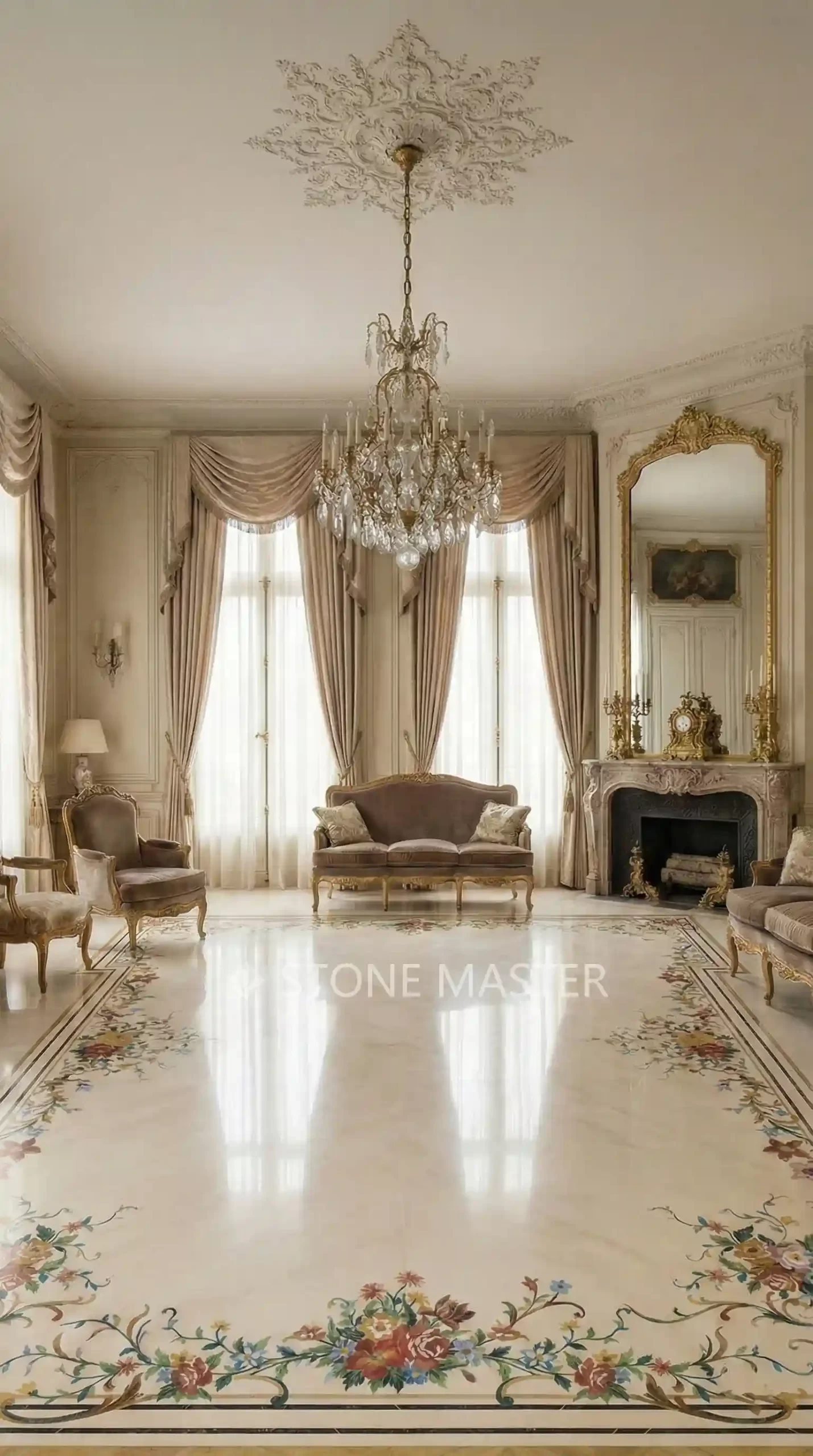
A Marble Medallion is far more than a decorative floor feature.
It is the centerpiece that defines the character of an interior and creates an unforgettable first impression.
From grand villa entrances and luxury hotel lobbies to elegant living rooms and palatial hallways, marble medallions have been used for centuries to express craftsmanship, prestige, and timeless beauty.
However, choosing the perfect marble medallion involves much more than selecting a beautiful pattern.
The success of your project depends on several critical factors, including the correct size, thickness, material selection, installation method, and manufacturing precision.
Even the most stunning design can lose its impact if the proportions are incorrect, the floor is improperly prepared, or the medallion does not align perfectly with the surrounding flooring.
For homeowners, architects, interior designers, and builders, understanding these technical details before making a purchase can save significant time, money, and unnecessary installation challenges.
This comprehensive buyer’s guide explains everything you need to know before investing in a custom marble medallion.
You’ll learn how to choose the right dimensions for different spaces, understand standard thickness options, prepare your floor correctly, avoid common installation mistakes, and ensure your investment remains beautiful for decades.
Whether you’re renovating a luxury residence or designing a landmark commercial project, this guide will help you make informed decisions with confidence.
A Marble Medallion is a decorative inlay created by precisely cutting and assembling multiple pieces of natural stone into a single artistic composition.
Unlike standard floor tiles, a marble medallion is designed to become the visual centerpiece of a room.
Each piece of marble is carefully shaped using advanced waterjet cutting technology before being assembled by skilled craftsmen into an intricate pattern.
The finished design is then installed flush with the surrounding flooring, creating a seamless appearance that looks as though the artwork was carved directly into the floor itself.
Depending on the design, a marble medallion may incorporate a wide variety of premium natural stones.
Popular materials include:
By combining contrasting colors, natural veining, and geometric precision, each medallion becomes a one-of-a-kind architectural artwork.
Modern manufacturing allows virtually unlimited customization.
Today’s designs range from classical European motifs and Renaissance-inspired patterns to contemporary geometric compositions and bespoke family crests.
Whether your interior style is traditional, transitional, or modern, a custom marble medallion can be tailored to complement your architectural vision.
The history of marble medallions dates back thousands of years.
Ancient Roman artisans decorated villas and public buildings with intricate stone mosaics that celebrated mythology, nature, and geometry.
During the Italian Renaissance, these decorative techniques evolved into the sophisticated art of Pietra Dura, where highly skilled craftsmen meticulously cut natural stone into elaborate floral, architectural, and ornamental compositions.
Over the centuries, this remarkable craftsmanship became a defining feature of Europe’s most prestigious palaces, churches, museums, and aristocratic residences.
Many of these historic marble floors remain intact today, demonstrating the extraordinary durability of natural stone when expertly designed and installed.
Modern marble medallions preserve this artistic tradition while incorporating advanced manufacturing technologies.
High-precision CNC machining and waterjet cutting now achieve remarkable accuracy, allowing even the most intricate designs to be reproduced with exceptional consistency.
However, the finishing process still relies heavily on experienced artisans.
The combination of advanced technology and handcrafted assembly ensures that every marble medallion retains both engineering precision and artistic character.
Because they naturally attract attention, marble medallions are most effective when installed in spaces that deserve a strong visual focal point.
Some of the most popular applications include:
In many luxury homes, the marble medallion serves as the first feature guests notice upon entering the property.
It immediately communicates craftsmanship, elegance, and attention to detail.
In hotels and commercial projects, it reinforces the brand image by creating a memorable arrival experience that leaves a lasting impression on visitors.
Interior design trends constantly evolve.
Colors change.
Furniture styles shift.
Popular materials come and go.
Yet marble has remained one of the world’s most admired architectural materials for thousands of years.
That lasting appeal is one of the main reasons why marble medallions continue to be chosen for luxury projects across the globe.
Unlike manufactured flooring that may become outdated after a decade, natural stone possesses an authenticity that transcends fashion.
Every slab features unique veining, subtle color variation, and organic textures created by nature over millions of years.
No two marble medallions are ever exactly alike.
This uniqueness gives every installation an exclusive identity that cannot be replicated by mass-produced materials.
A marble medallion also offers exceptional versatility.
Classical European interiors often feature ornate floral patterns inspired by Renaissance architecture.
Modern homes may choose minimalist geometric medallions with clean lines and contrasting monochrome marble.
Middle Eastern villas frequently incorporate elaborate arabesque designs that reflect local architectural traditions.
The design possibilities are virtually limitless.
Beyond aesthetics, marble is also an investment in long-term value.
Natural stone flooring has long been associated with premium real estate and luxury construction.
A professionally designed marble medallion enhances architectural character while contributing to the perceived quality of the property.
For many homeowners, it becomes a permanent feature that can be admired for generations rather than replaced as trends change.
Perhaps most importantly, a marble medallion is more than flooring.
It tells a story.
It reflects personal taste.
It showcases craftsmanship.
It transforms an ordinary floor into a work of architectural art.
When thoughtfully designed and expertly manufactured, it becomes a signature element of the entire interior rather than simply another building material.
That is why marble medallions have remained timeless for centuries—and why they continue to define some of the world’s most extraordinary spaces today.
Choosing the correct Marble Medallion size is one of the most important decisions you will make during the design process.
A beautifully crafted medallion can lose its visual impact if the proportions are wrong.
A design that is too small may appear insignificant within a large room.
A design that is too large can overwhelm the surrounding architecture and make the space feel crowded.
Unlike furniture or decorative accessories that can be replaced later, a marble medallion becomes a permanent architectural feature.
Taking time to determine the correct dimensions before production helps ensure a balanced, elegant, and timeless result.
The goal is not simply to choose the biggest medallion possible.
Instead, the objective is to create harmony between the medallion, the room, the surrounding flooring, and the overall interior design.
Before selecting any design, accurately measure the room where the medallion will be installed.
Many buyers make the mistake of choosing a design based only on photographs or online inspiration.
However, two identical medallions can create completely different visual effects depending on the size and layout of the room.
Important measurements include:
These dimensions help determine both the maximum available diameter and the ideal visual proportion.
If your project is still in the design stage, providing a CAD drawing or floor plan allows your manufacturer to recommend the most suitable medallion size before production begins.
For renovation projects, accurate on-site measurements are equally important to ensure the medallion integrates perfectly with the existing flooring.
One of the most overlooked factors is the amount of floor that will actually remain visible after furniture is installed.
For example, placing a large marble medallion directly beneath a dining table means much of the design will be permanently hidden.
Similarly, oversized sofas or large rugs may cover significant portions of the artwork.
Before deciding on a size, consider the final furniture arrangement.
Ask yourself:
If most of the design will be concealed, a smaller center medallion combined with decorative borders or corner inlays may create a more elegant overall composition.
In open foyers and entrance halls, however, a larger medallion often becomes the perfect focal point because the floor remains unobstructed.
A marble medallion should enhance the room rather than dominate it.
Interior designers often follow a simple design principle: leave sufficient surrounding flooring to frame the medallion naturally.
This surrounding flooring is commonly referred to as the field material.
The field material acts like the frame around a painting.
Without enough space around the medallion, the design may feel cramped.
Too much empty flooring, on the other hand, can reduce the medallion’s visual impact.
Although every project is unique, many designers recommend allowing a generous border of surrounding stone between the medallion and nearby walls.
This balance helps direct attention toward the center while maintaining an open and sophisticated appearance.
Rather than viewing the medallion as an isolated decorative element, think of it as one component within the entire flooring composition.
There is no universal size that fits every project.
However, certain diameter ranges have proven effective for different types of residential and commercial spaces.
| Installation Area | Recommended Diameter |
|---|---|
| Small Entryway | 24–36 inches (600–900 mm) |
| Residential Foyer | 36–48 inches (900–1200 mm) |
| Large Villa Entrance | 48–72 inches (1200–1800 mm) |
| Living Room | 60–96 inches (1500–2400 mm) |
| Dining Room | 48–72 inches (1200–1800 mm) |
| Ballroom | 96–144 inches (2400–3600 mm) |
| Hotel Lobby | 120 inches (3000 mm) or larger |
| Palace or Commercial Atrium | Fully customized |
These recommendations serve only as starting points.
Every architectural project has its own proportions, furniture layout, and design style.
Custom manufacturing allows virtually any diameter to be produced, ensuring the medallion fits the space perfectly rather than forcing the room to adapt to standard dimensions.
Different spaces serve different purposes.
As a result, the ideal medallion size varies from room to room.
The entrance creates the first impression of the home.
This is one of the best locations for a marble medallion because visitors can appreciate the entire design immediately upon entering.
A larger medallion usually works well here, especially in homes with double-height ceilings or grand staircases.
The medallion should be centered precisely within the entrance area to establish visual symmetry.
Living rooms often contain sofas, coffee tables, and area rugs.
Because furniture occupies much of the floor, consider how much of the medallion will remain visible.
In some layouts, placing the medallion beneath a chandelier rather than directly under the coffee table creates a stronger visual effect.
Large open-plan living rooms can accommodate generous medallion sizes without overwhelming the space.
Dining rooms require special planning.
If a large dining table permanently covers the center of the room, an elaborate medallion beneath it may not be the best investment.
Instead, many designers incorporate elegant marble borders, corner accents, or multiple decorative inlays around the perimeter of the room.
If a center medallion is preferred, ensure that enough of the outer pattern remains visible around the table to preserve its artistic impact.
Long corridors benefit from repeated decorative elements rather than one oversized medallion.
Smaller circular medallions positioned at key intersections or connected with decorative borders help guide movement through the space while maintaining visual rhythm.
Commercial projects often feature expansive open areas with high ceilings.
These spaces can accommodate dramatic oversized medallions that immediately establish a luxurious atmosphere.
Large hotel lobbies frequently combine a central medallion with intricate border designs extending throughout the surrounding flooring.
Because these installations become part of the property’s identity, customization is especially important.
Although circular medallions remain the most popular choice, they are far from the only option.
Today’s advanced waterjet technology allows virtually any shape to be manufactured with exceptional precision.
Popular options include:
The best shape depends on the room’s architecture.
Circular designs soften rectangular spaces and naturally draw attention toward the center.
Rectangular or oval medallions often complement elongated rooms, while fully customized shapes allow architects to create truly unique interiors.
A marble medallion is not viewed from only one angle.
People experience it as they walk through the space.
Think about the primary viewing direction before finalizing the design.
For example:
Directional patterns, floral arrangements, family emblems, and compass designs should all be oriented toward the primary viewpoint.
Proper orientation enhances the visual experience and reinforces the architectural flow of the interior.
One of the most effective ways to confirm the correct medallion size is by reviewing a detailed CAD layout before production begins.
A professional CAD drawing allows you to visualize:
This design stage significantly reduces installation risks and gives homeowners, architects, and designers confidence before manufacturing begins.
At Stone Master, every custom marble medallion is developed from detailed CAD drawings before production.
Our design team carefully reviews proportions, layout, and installation details to ensure every medallion complements the surrounding architecture perfectly.
Even experienced homeowners sometimes overlook important sizing considerations.
Avoid these common mistakes to achieve the best possible result.
Choosing a size based only on online photos.
A medallion that looks perfect in another home may appear completely different in your own space.
Always base your decision on actual room dimensions rather than inspiration images alone.
Ignoring surrounding furniture.
Large furniture pieces can hide much of the design.
Plan the final room layout before selecting the medallion diameter.
Installing the medallion too close to walls.
Without sufficient field material surrounding the medallion, the design can appear crowded and lose its elegance.
Selecting a standard size when a custom size is needed.
Every luxury project is unique.
Custom sizing often creates a far more balanced result than forcing the room to fit a standard diameter.
Skipping professional design consultation.
Experienced manufacturers can identify proportion issues long before production begins.
Their recommendations often improve both the appearance and installation process.
Selecting the right marble medallion size is about achieving balance, not simply maximizing scale.
When the dimensions, placement, and proportions are carefully planned, the medallion becomes a natural extension of the architecture, enhancing the entire space with elegance, harmony, and timeless sophistication.
While size determines the visual impact of a Marble Medallion, thickness determines whether the installation will be smooth, durable, and perfectly integrated with the surrounding flooring.
Many buyers focus on the design and overlook thickness until the installation begins.
Unfortunately, this is when problems become expensive to correct.
If the medallion is thicker than the surrounding flooring, it will create an uneven surface.
If it is too thin, installers must compensate by adding extra mortar, making it more difficult to achieve a perfectly level finish.
Choosing the correct thickness before production helps eliminate installation issues and ensures the medallion blends seamlessly with the rest of the floor.
Unlike decorative rugs or furniture, a marble medallion becomes part of the permanent flooring system.
It must sit flush with the surrounding stone, porcelain tile, or other flooring materials.
Even a slight height difference can affect both the appearance and the functionality of the floor.
A properly matched thickness offers several important advantages:
For luxury residential and commercial projects, precision at this stage is just as important as the beauty of the design itself.
There is no single thickness suitable for every project.
The correct specification depends on the surrounding flooring material, installation method, and project requirements.
At Stone Master, we manufacture custom marble medallions in a variety of thicknesses to match different applications.
Common options include:
| Thickness | Typical Applications |
|---|---|
| 5 mm | Wall decoration, furniture surfaces, lightweight renovation projects |
| 10 mm | Thin porcelain flooring systems, wall panels, renovation over existing substrates |
| 14 mm | Most residential marble flooring projects |
| 16 mm | Standard luxury villa flooring and premium natural stone installations |
| 18 mm | Heavy-duty residential and light commercial applications |
| 20 mm | Commercial projects, public buildings, and projects requiring thicker natural stone |
Because every project is different, custom thicknesses can also be manufactured to meet specific architectural requirements.
Rather than adapting your flooring to fit a standard product, the medallion should be produced to match your project.
One of the most important principles is simple:
The marble medallion should match the finished height of the surrounding floor.
This allows the entire surface to appear as one continuous floor rather than separate materials.
If the surrounding flooring has not yet been installed, matching thickness is straightforward.
However, renovation projects require additional planning.
For example, many homeowners wish to replace an existing tile floor with a decorative marble medallion while keeping the surrounding flooring intact.
In these situations, accurate measurements become essential.
Your manufacturer should know:
Providing this information before production allows the medallion to be manufactured to the correct specification, reducing installation adjustments on-site.
Many homeowners ask whether a marble medallion can be installed into an existing floor.
The answer is yes—in many cases.
The installation method depends on the condition and thickness of the existing flooring.
For renovation projects, installers typically remove the flooring only in the area where the medallion will be installed.
The substrate beneath that section may then be adjusted to accommodate the thickness of the new medallion.
If necessary, the installer can slightly lower the base so the finished medallion aligns perfectly with the surrounding floor.
This approach allows homeowners to upgrade the appearance of an entrance or living space without replacing the entire floor.
Careful planning before manufacturing helps ensure the installation proceeds smoothly.
Each thickness option offers different advantages depending on the application.
Thinner medallions are often selected for renovation projects where minimizing floor height is important.
Advantages include:
However, thinner products require a stable, well-prepared substrate because they are less forgiving of uneven surfaces.
The majority of luxury residential projects use standard thickness medallions.
These provide an ideal balance between strength, durability, and installation convenience.
Standard thickness options work particularly well with natural marble flooring, allowing seamless transitions throughout the space.
Commercial buildings and public spaces often require thicker natural stone.
Hotels, shopping centers, luxury retail stores, and grand reception halls experience continuous foot traffic.
A thicker medallion offers additional structural stability and integrates well with thicker commercial flooring systems.
Outdoor projects may also benefit from increased thickness depending on the installation method and environmental conditions.
Selecting the correct thickness is only part of the equation.
Manufacturing accuracy is equally important.
If one section of the medallion varies in thickness, installation becomes significantly more difficult.
Advanced waterjet technology allows every stone component to be cut with exceptional precision.
At Stone Master, each piece is carefully calibrated during production to maintain consistent thickness throughout the entire medallion.
This level of accuracy provides several important benefits:
Consistent thickness also helps eliminate unnecessary grinding or leveling after installation.
Large marble medallions often consist of hundreds—or even thousands—of individual stone pieces.
Even with precision cutting, every component must fit together perfectly before shipment.
To ensure this, Stone Master performs a complete pre-assembly at the factory.
Every stone piece is temporarily assembled according to the approved CAD drawing.
During this process, our technicians inspect:
Only after every detail has been carefully checked is the medallion disassembled, labeled, packaged, and prepared for shipment.
This quality-control process greatly reduces installation risks and gives installers confidence that every section will fit exactly as intended.
Modern marble medallions are far more precise than those produced using traditional cutting methods.
Stone Master uses advanced CNC waterjet technology capable of producing highly detailed components with remarkable consistency.
This technology offers several advantages:
Combined with skilled hand assembly, waterjet cutting makes it possible to reproduce highly detailed artistic designs while maintaining exceptional dimensional accuracy.
For complex luxury projects, this precision is essential to achieving a flawless final result.
Indoor and outdoor environments place different demands on natural stone.
Interior installations are protected from weather, making it easier to use a wider range of thickness options depending on the flooring system.
Outdoor installations must withstand:
For these reasons, outdoor marble medallions often require thicker stone, stronger installation systems, and carefully designed drainage solutions.
Project requirements vary by climate and application, so it is always advisable to consult your supplier before determining the final specification.
Thickness-related problems are among the most common causes of installation delays.
Fortunately, they can usually be avoided with proper planning.
Avoid these common mistakes:
Choosing thickness without knowing the surrounding flooring.
Always measure the existing or planned flooring before production begins.
Assuming all marble tiles have the same thickness.
Different quarries and manufacturers often produce materials with varying thicknesses.
Verification is essential.
Ignoring adhesive thickness.
Finished floor height includes both the stone and the installation materials beneath it.
Ordering before confirming construction details.
Coordinate with your architect, contractor, or installer before finalizing production drawings.
Working with suppliers who do not provide technical guidance.
Experienced manufacturers should review your project details and recommend the most appropriate thickness based on the actual installation conditions.
Selecting the correct marble medallion thickness is not simply a manufacturing decision—it is an essential part of successful project planning.
When thickness, flooring materials, installation methods, and manufacturing precision are considered together, the finished medallion becomes a seamless part of the architecture, delivering the elegance, durability, and craftsmanship that define truly exceptional interiors.
A beautifully crafted Marble Medallion deserves an equally well-prepared foundation.
Even the finest natural stone cannot compensate for an uneven subfloor, poor planning, or incorrect installation methods.
Professional installers often say that successful marble installation begins long before the first piece of stone is placed.
Proper floor preparation not only ensures a flawless appearance but also protects your investment for decades.
Taking the time to prepare the installation area correctly helps prevent cracking, uneven surfaces, hollow spots, and unnecessary repairs in the future.
Marble is a natural stone with exceptional compressive strength, but like all stone products, it has very little flexibility.
If the substrate beneath the flooring moves or settles over time, stress can transfer directly into the stone, increasing the risk of cracks or loose tiles.
Before installation begins, the subfloor should be carefully inspected to ensure it is:
Different floor structures require different preparation methods.
Concrete provides one of the best foundations for marble flooring.
However, the concrete must be fully cured before installation.
The surface should also be checked for:
Any imperfections should be repaired before adhesive is applied.
Wood naturally expands and contracts with changes in temperature and humidity.
For this reason, marble should never be installed directly onto plywood alone.
Most professional installers first install a cement backer board or another approved underlayment to create a rigid and stable base.
This additional layer minimizes movement and helps protect the marble from future cracking.
One of the biggest challenges during installation is an uneven floor.
Even slight variations in the substrate can create visible height differences between stone pieces.
Professional installers typically verify floor flatness using long straightedges or laser levels before installation begins.
If necessary, self-leveling compounds can be applied to create a perfectly smooth installation surface.
A properly leveled floor offers several advantages:
Correcting floor imperfections before installation is significantly easier than attempting to fix them afterward.
Before removing any existing flooring or mixing adhesive, determine the precise location of the marble medallion.
This planning stage affects the visual balance of the entire room.
In most projects, the medallion is positioned according to one of the following reference points:
Choosing the correct center point ensures that the medallion aligns naturally with the surrounding architecture.
Even a perfectly manufactured medallion can appear visually unbalanced if it is installed only a few inches off center.
For large luxury residences, architects often establish centerlines across multiple connected rooms to ensure perfect alignment throughout the property.
One of the most important steps in marble medallion installation is the dry layout.
This means assembling and positioning the medallion without adhesive before permanent installation begins.
Although it requires additional time, the dry layout helps identify potential issues before they become expensive problems.
During the dry layout, installers verify:
Any necessary adjustments can be made while the pieces are still easy to move.
Once adhesive is applied, repositioning becomes much more difficult.
Professional installers consider the dry layout an essential quality-control step rather than an optional one.
At Stone Master, every custom marble medallion undergoes a complete factory pre-assembly before shipment.
This process allows our craftsmen to verify that every individual piece fits perfectly according to the approved CAD drawing.
Unlike products shipped directly after cutting, pre-assembled medallions provide installers with greater confidence and significantly reduce the possibility of installation errors.
During pre-assembly, our quality control team carefully checks:
After inspection, every section is carefully labeled and packed according to the installation sequence.
When the shipment arrives on-site, installers simply follow the provided numbering system and layout drawings.
This process saves valuable installation time while reducing the likelihood of mistakes.
Large marble medallions are often divided into manageable sections for transportation.
Each section is individually labeled before packaging.
Every label corresponds directly to the installation drawings supplied with the shipment.
This numbering system allows installers to identify:
For highly detailed custom projects containing hundreds of stone components, accurate labeling is essential for efficient installation.
Without proper identification, installation becomes slower and increases the risk of assembly errors.
Not every marble medallion is symmetrical.
Many custom designs include directional elements such as:
Before installation begins, verify that the design faces the intended viewing direction.
Typically, the medallion should be oriented toward:
Checking orientation during the dry layout eliminates unnecessary corrections later.
A marble medallion rarely exists in isolation.
It usually connects with surrounding marble tiles, decorative borders, or patterned flooring.
Before permanent installation, installers should verify:
Careful coordination between the medallion and surrounding materials creates the appearance of a single unified floor rather than separate decorative elements.
Natural marble is durable, but polished surfaces should still be protected throughout the installation process.
Heavy construction activities performed after the medallion has been installed can damage the finished surface.
Professional installers often protect completed flooring using breathable protective coverings while other construction work continues.
Avoid placing:
directly on the polished marble surface.
Keeping the installation area clean also helps prevent scratches caused by sand or other abrasive particles.
Professional preparation also includes organizing all required installation materials before work begins.
Typical tools include:
Having every tool ready improves installation efficiency and minimizes interruptions during the process.
Many installation problems can be traced back to inadequate preparation rather than manufacturing defects.
Avoid these common mistakes:
Installing over an uneven substrate.
An uneven floor can create hollow spots, lippage, and long-term structural stress.
Skipping moisture testing.
Excess moisture may weaken adhesive performance and affect certain installation materials.
Ignoring the dry layout.
Verifying fit before installation is one of the easiest ways to prevent costly mistakes.
Incorrect center point placement.
A medallion that is even slightly off-center can disrupt the visual balance of the entire room.
Not reviewing the installation drawings.
Every custom medallion is manufactured according to approved CAD layouts.
Following these drawings ensures accurate placement on-site.
Allowing other trades to work directly on newly installed marble.
Protect the finished surface until the project is fully completed.
Proper floor preparation is the foundation of every successful marble medallion installation.
When the substrate is stable, the layout is carefully planned, and every section has been checked before installation begins, the process becomes faster, more accurate, and far more reliable.
Combined with precision manufacturing, detailed CAD drawings, factory pre-assembly, and professional installation practices, careful preparation ensures that your marble medallion will become a seamless architectural centerpiece that can be admired for generations.
Installing a Marble Medallion is a precision process that combines craftsmanship, engineering, and careful planning.
Unlike standard floor tiles, a marble medallion consists of numerous individually cut stone pieces that must fit together perfectly to create a seamless work of art.
Even the highest-quality medallion requires proper installation to achieve its full beauty and long-term performance.
Working with experienced installers is always recommended, especially for large custom projects or intricate inlay designs.
The following installation process outlines the general steps used by professional installers for most residential and commercial projects.
Before opening the crates, carefully inspect the shipment for any visible signs of transportation damage.
Although marble medallions are securely packed in reinforced wooden crates with protective foam, every shipment should be examined immediately upon arrival.
After opening the package, verify:
If any issues are discovered, contact your supplier before beginning installation.
Do not install damaged materials until the situation has been resolved.
Every custom marble medallion should be accompanied by detailed installation drawings.
These drawings provide valuable information about:
Review the drawings carefully with your installation team before any adhesive is mixed.
This helps ensure everyone understands the installation plan and reduces the possibility of mistakes on-site.
Before applying adhesive, place every section of the medallion into position according to the installation drawings.
The dry layout confirms:
Large medallions may consist of several numbered sections.
Lay out all sections together to verify that the complete design aligns perfectly before permanent installation begins.
This step allows installers to make minor adjustments quickly and efficiently.
The center point serves as the reference for the entire installation.
Once confirmed during the dry layout, mark the center using chalk lines, laser levels, or layout strings.
For symmetrical designs, maintaining this center point throughout installation is essential.
If the medallion shifts even slightly during installation, the surrounding flooring may no longer align correctly.
Professional installers frequently check measurements throughout the installation process to maintain perfect positioning.
Selecting the correct adhesive is just as important as selecting the correct marble.
The adhesive should be compatible with both the natural stone and the installation substrate.
For most marble flooring applications, high-performance white thin-set mortar or medium-bed mortar is commonly used.
For certain specialty applications—particularly medallions manufactured with an epoxy backing—an epoxy adhesive system may be recommended.
Always follow the adhesive manufacturer’s installation guidelines regarding:
Using white adhesive is generally recommended for light-colored marble because darker mortars may affect the appearance of translucent stones.
After spreading the adhesive evenly with the appropriate notched trowel, carefully position each section according to the layout plan.
Large medallions should be installed section by section while continuously checking alignment.
Installers should verify:
Rubber mallets and suction lifters are often used to position the stone gently without damaging polished surfaces.
Avoid forcing pieces into place.
A properly manufactured marble medallion should fit naturally with minimal adjustment.
Once the medallion has been positioned correctly, the surrounding marble or stone flooring can be installed.
The surrounding field material should align perfectly with the outer edge of the medallion.
Pay close attention to:
This stage transforms the medallion from an individual decorative element into a seamless part of the overall flooring design.
After installation, avoid walking on the newly installed marble until the adhesive has fully cured.
Curing times vary depending on:
Rushing this stage can cause movement that affects alignment or weakens the bond beneath the stone.
Protect the installation area during the curing period to prevent accidental disturbance.
Once the adhesive has fully cured, the remaining joints can be filled with grout.
For premium marble medallions, epoxy grout is often the preferred choice because it offers:
If your marble medallion includes factory pre-assembled sections with epoxy-backed joints, follow the supplier’s grouting recommendations carefully.
Mix the grout according to the manufacturer’s instructions and apply it only to the open joints.
Avoid spreading grout unnecessarily across the polished marble surface.
Working in small sections makes cleanup easier and helps maintain a clean finish.
After grouting, clean the marble using appropriate stone-safe cleaning materials.
Remove grout residue before it hardens completely.
Avoid using:
These products may damage polished marble surfaces or alter the natural finish.
Instead, use clean water, soft sponges, microfiber cloths, and cleaners specifically designed for natural stone.
Proper cleaning reveals the true beauty of the marble and prepares the floor for sealing.
Although sealing is not always mandatory for every type of natural stone, it is highly recommended for most marble flooring applications.
A high-quality penetrating stone sealer helps:
Follow the sealer manufacturer’s instructions regarding application methods and drying times.
Depending on the type of marble and the amount of foot traffic, periodic resealing may be recommended to maintain long-term protection.
Before considering the installation complete, perform a comprehensive quality inspection.
Check for:
Walk around the room from different viewing angles to ensure the medallion appears balanced and centered within the space.
This final review ensures that every detail meets the expected standard of craftsmanship.
Experienced installers understand that successful marble installation depends on attention to detail rather than speed.
Some professional recommendations include:
These simple practices significantly improve installation quality and reduce unnecessary risks.
Even premium marble medallions can encounter problems if installation best practices are ignored.
Avoid the following mistakes:
Skipping the dry layout.
Always confirm the fit before applying adhesive.
Using the wrong adhesive.
Choose products specifically recommended for natural stone.
Ignoring pattern orientation.
Directional designs should face the primary viewing angle.
Walking on the floor too soon.
Allow adequate curing time before exposing the installation to foot traffic.
Using harsh cleaning chemicals.
Only use products formulated for natural stone.
Failing to protect the finished floor.
Cover completed installations while other construction work continues.
A marble medallion is more than a flooring product—it is a handcrafted architectural feature that deserves expert installation.
Professional installers understand how to manage natural stone, maintain precise alignment, and create seamless transitions between decorative inlays and surrounding flooring.
Combined with accurate CAD drawings, precision waterjet manufacturing, factory pre-assembly, and comprehensive quality control, professional installation ensures that every marble medallion performs exactly as intended.
When every stage—from planning and positioning to grouting and sealing—is executed with care, the finished result becomes a timeless centerpiece that enhances the elegance, value, and character of the space for generations.
A premium Marble Medallion represents a significant investment in both craftsmanship and natural materials.
Protecting that investment during transportation is just as important as precision manufacturing.
Whether your project is located across the country or on the other side of the world, proper packaging and shipping ensure that your marble medallion arrives safely, accurately, and ready for installation.
At Stone Master, every shipment is carefully planned to minimize transportation risks while making on-site installation as efficient as possible.
From factory inspection to final packaging, every step is designed to protect the finished product and simplify the installation process.
Unlike ordinary flooring materials, marble medallions contain numerous precisely cut pieces that must maintain exact dimensions throughout transportation.
Natural stone is extremely durable under compression, but polished edges and intricate inlay details require careful protection against impact and vibration.
Poor packaging can lead to:
Professional packaging greatly reduces these risks and ensures the medallion reaches the project site in excellent condition.
Marble medallions should always be packed in heavy-duty wooden crates specifically designed for international transportation.
These export-grade crates provide excellent structural support throughout loading, shipping, and unloading.
At Stone Master, each crate is custom-built according to the size and weight of the project.
Every crate is engineered to withstand:
Using properly constructed wooden crates significantly reduces the possibility of transportation damage during global shipping.
The exterior crate is only one part of the protection system.
Inside the packaging, multiple layers of protective materials help secure every section of the marble medallion.
Depending on the project, these materials may include:
These materials prevent movement inside the crate and reduce stress on delicate stone edges during transportation.
Keeping every section securely immobilized is essential for maintaining dimensional accuracy.
One of Stone Master’s greatest advantages is our factory pre-assembly process.
Before packaging begins, every custom marble medallion is completely assembled at our factory according to the approved CAD drawings.
This quality-control process allows our team to verify:
Only after passing inspection is the medallion carefully separated into shipping sections.
This ensures that every component has already been tested for perfect fit before it leaves the factory.
As a result, installers spend less time making adjustments on-site, and the overall installation process becomes faster and more efficient.
Large marble medallions often exceed the practical shipping size for a single piece.
To make transportation safer, they are divided into manageable sections.
Each section receives a unique identification label before packaging.
The numbering system corresponds directly with the installation drawings provided with the shipment.
This allows installers to quickly identify:
Accurate labeling greatly reduces installation time while minimizing the possibility of assembly errors.
For highly intricate designs containing hundreds of individual stone pieces, this system is especially valuable.
Every custom marble medallion should be accompanied by detailed installation documentation.
These drawings serve as a guide throughout the installation process.
Typical documentation includes:
Having these drawings available on-site allows contractors and installers to work more confidently and accurately.
It also provides an additional layer of quality assurance throughout the installation process.
Stone Master supplies marble medallions to clients around the world.
Every project is carefully coordinated according to the customer’s destination, construction schedule, and shipping requirements.
Depending on the project, available shipping methods may include:
For most large residential and commercial projects, sea freight remains the most economical solution.
Proper export packaging ensures that the medallion remains protected throughout the entire journey, regardless of transportation method.
Every marble medallion undergoes multiple inspections before leaving our factory.
Our quality-control team carefully verifies:
Photographs and videos of the completed product are often provided to customers before shipment.
This allows clients to review the finished medallion and confirm that it matches the approved design before it begins its journey.
Choosing the right supplier is just as important as choosing the right Marble Medallion.
A beautifully designed medallion requires more than premium materials.
It requires experienced designers, precision manufacturing, strict quality control, and professional support throughout the entire project.
With more than 25 years of experience in luxury stone craftsmanship, Stone Master has helped homeowners, architects, interior designers, developers, and contractors transform their visions into timeless architectural masterpieces.
Every custom marble medallion we produce reflects our commitment to quality, precision, and exceptional service.
Since 1999, Stone Master has specialized in custom marble inlay products for luxury residential and commercial projects.
Our portfolio includes thousands of successful installations in:
This experience allows us to understand the unique technical requirements of projects of every scale.
Every project is unique.
Rather than limiting customers to standard patterns, we offer complete customization.
Our design team can create a custom marble medallion based on:
Whether your style is classical, contemporary, Art Deco, Islamic, European, or completely original, we can transform your ideas into a finished marble masterpiece.
Precision is essential for decorative stone inlay.
Stone Master utilizes advanced CNC waterjet cutting equipment capable of producing exceptionally accurate components with intricate details.
This technology offers:
Combined with skilled hand-finishing, this technology allows us to create highly detailed marble medallions that fit together seamlessly.
Technology alone cannot create exceptional marble inlay.
Every Stone Master marble medallion is carefully assembled by experienced craftsmen who inspect every stone piece before final production.
Our artisans carefully match:
The combination of precision machinery and traditional craftsmanship ensures every medallion possesses both technical accuracy and artistic beauty.
Before shipment, every custom marble medallion is completely pre-assembled inside our factory.
This important quality-control process allows us to verify:
Only after passing inspection is the medallion disassembled, labeled, photographed, and packaged for export.
This process significantly reduces installation risks and provides greater confidence for installers on-site.
Every custom project includes professional technical documentation.
Our design team prepares detailed CAD drawings showing:
If needed, our technical team also provides installation guidance throughout the project, helping contractors and installers achieve the best possible results.
Quality is inspected throughout the entire manufacturing process.
Before shipment, every project undergoes multiple inspections covering:
Customers can also receive production photos and videos before shipment for additional peace of mind.
Stone Master has successfully supplied luxury marble projects to clients across North America, Europe, the Middle East, Southeast Asia, Australia, and many other regions.
Our export team understands international logistics and prepares every shipment according to global transportation standards.
From custom wooden crates to detailed installation documentation, we ensure every project arrives safely and ready for installation.
Every custom marble medallion project receives personalized attention.
From the initial consultation through final delivery, our experienced team works closely with homeowners, architects, designers, and builders to answer questions, solve technical challenges, and provide timely project updates.
Our goal is not simply to manufacture stone products.
Our goal is to become a trusted long-term partner for every luxury project.
A marble medallion is a decorative floor inlay created by assembling precisely cut pieces of natural stone into an artistic pattern.
It is commonly installed in foyers, entrances, hotel lobbies, living rooms, and other feature areas to create a luxurious focal point.
Yes.
Almost every aspect can be customized, including the size, shape, materials, colors, patterns, borders, logos, family crests, and overall design.
Custom manufacturing allows the medallion to fit your space perfectly.
Common residential diameters range from 36 inches to 72 inches (900–1800 mm).
Large villas, hotel lobbies, and commercial spaces often require custom sizes exceeding 120 inches (3000 mm).
The ideal size depends on the room dimensions and surrounding architecture.
Most residential projects use marble medallions between 14 mm and 20 mm thick.
The correct thickness should always match the surrounding flooring system to ensure a perfectly level finished surface.
Yes.
In many renovation projects, installers remove only the flooring where the medallion will be placed.
The substrate is then adjusted so the new medallion sits flush with the surrounding floor.
Installation time depends on the size and complexity of the project.
Smaller residential medallions may be completed within a day, while large custom installations for villas or hotels may require several days, including floor preparation, installation, grouting, and sealing.
Large medallions are divided into numbered sections before shipping.
Each section is clearly labeled and corresponds to detailed installation drawings, making on-site assembly efficient and accurate.
Yes.
With appropriate stone selection, proper thickness, and professional installation methods, marble medallions can be used in exterior entrances, courtyards, patios, and other outdoor applications.
Climate conditions should always be considered during material selection.
Routine maintenance is simple.
Use a pH-neutral cleaner designed specifically for natural stone.
Avoid acidic or abrasive cleaning products, as they may damage the polished surface.
Regular dust removal and occasional damp mopping will help maintain the marble’s natural beauty.
Most marble flooring benefits from the application of a high-quality penetrating stone sealer.
Sealing helps reduce staining and moisture absorption while making routine maintenance easier.
The frequency of resealing depends on the type of stone and the level of foot traffic.
Luxury natural stone features often enhance the perceived value of a property.
A professionally designed and installed marble medallion creates a lasting impression and contributes to the overall elegance of high-end residential and commercial spaces.
Pricing depends on several factors, including:
Because every project is unique, requesting a custom quotation is the best way to obtain accurate pricing.
A marble medallion is more than a decorative flooring element.
It is a lasting expression of craftsmanship, luxury, and architectural excellence.
From selecting the perfect size and thickness to ensuring precise manufacturing, professional installation, and careful maintenance, every step contributes to the beauty and longevity of your investment.
At Stone Master, we combine over 25 years of experience, advanced waterjet cutting technology, skilled handcrafted craftsmanship, and comprehensive factory quality control to create marble medallions that meet the highest international standards.
Whether you are designing a luxury villa, a five-star hotel, a private residence, or a landmark commercial project, our team is ready to help you bring your vision to life.
Contact Stone Master today to discuss your project, request a free CAD design consultation, receive marble samples, or obtain a customized quotation.
Together, we can create a one-of-a-kind marble medallion that will become the centerpiece of your space for generations.


